
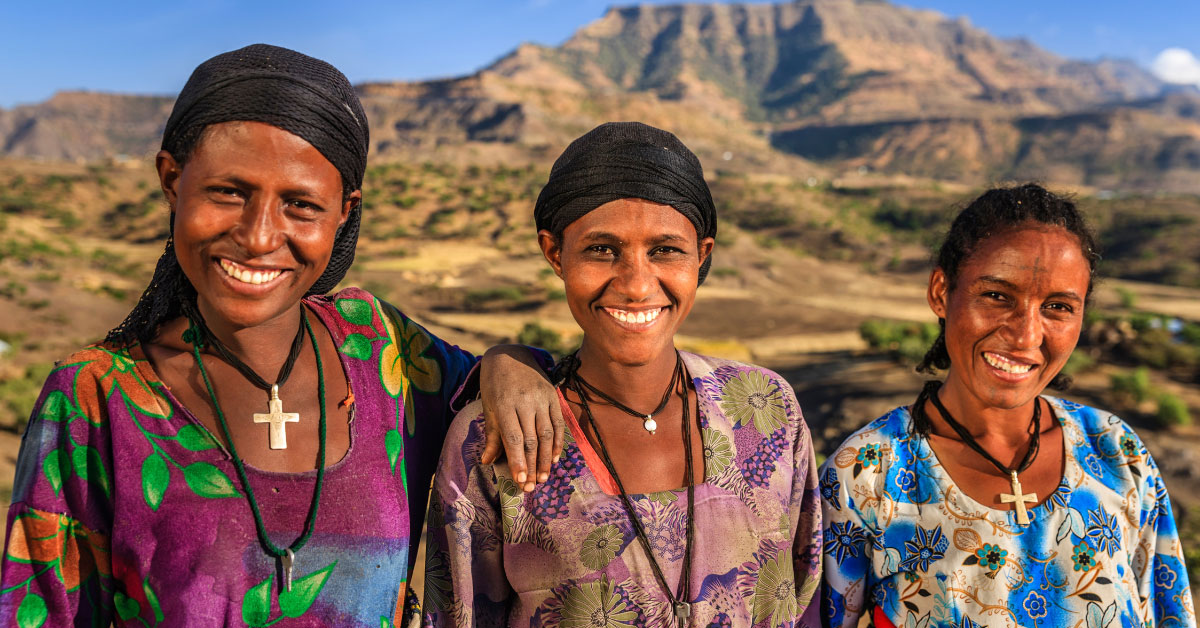
In many parts of the world, managing money has never depended on a bank branch or formal financial institution. Instead, it has depended on communities themselves.
Across regions and cultures, people have long created systems that allow them to save together, access small loans, and support one another during financial need. These systems are known today as community savings groups, and they continue to play a critical role in expanding financial access.
Savings groups exist in many forms and under many different names. In West Africa they are often known as esusu or susu. In Ethiopia they are called iqub. In Kenya they are widely known as chamas, while in Indonesia similar systems operate under the name arisan. Despite these regional variations, the structure and purpose remain remarkably similar.
Members come together regularly to contribute small amounts of money into a shared fund. From that fund, members can borrow, invest, and manage financial needs collectively.
Today, savings groups are a global phenomenon. It is estimated that more than 20 million savings groups serve over 300 million people worldwide, the majority of whom are women. For many participants, these groups represent the first structured financial system they interact with.
In communities where the barriers described in the global financial inclusion gap remain common, savings groups provide an accessible way for individuals to manage money without relying on distant or costly financial institutions.
Organizations working to expand financial inclusion increasingly recognize the importance of these systems. At DreamStart Labs, much of our work focuses on supporting organizations that facilitate savings groups and helping strengthen the systems that allow them to operate effectively across different regions.
Understanding why these groups remain so widespread begins with understanding how they function.
How Community Savings Groups Work
Although the details may vary across regions, most savings groups operate through a simple and transparent structure built around regular meetings and shared financial responsibility.
A typical group consists of 10 to 30 members who meet regularly, often once a week. During each meeting, members contribute a fixed savings amount that is agreed upon by the group. These contributions are added to a shared fund that the group manages collectively.
This pooled fund becomes the source of loans for group members. When a member needs money—for example to purchase farming inputs, pay school fees, or support a small business—they can request a loan during the meeting. The group discusses the request and collectively agrees on the loan amount and repayment terms.
Loans are usually repaid gradually over time, often with a small interest rate that the group itself determines. Unlike formal lending institutions, the interest paid on these loans does not leave the community. Instead, it increases the value of the group’s shared fund.
Over time, the group’s fund grows through regular savings contributions as well as interest generated from loans. This growth becomes particularly meaningful at the end of a savings cycle.
The Share-Out Process
Savings groups typically operate in cycles that last between 9 and 12 months. At the end of the cycle, the group gathers to distribute the total amount saved.
This process, known as the share-out, allows members to receive a lump sum based on how much they contributed throughout the cycle.
Savings groups generally track contributions in one of two ways: through direct currency contributions or through a share system.
In some groups, members contribute a monetary amount during each meeting, and contributions are recorded directly in currency. At the end of the cycle, the total amount saved—along with any interest earned from loans—is distributed back to members according to how much each person contributed.
However, many savings groups use a share-based system, particularly in models such as Village Savings and Loan Associations (VSLAs). In this structure, each share has a fixed value that is agreed upon by the group at the beginning of the cycle. During meetings, members purchase shares rather than contributing a fixed amount of currency.
Some groups place limits on how many shares a member can buy during a single meeting in order to ensure fairness and accessibility.
At the end of the cycle, the group calculates the total number of shares purchased by all members. The total value of the group’s fund—including savings contributions, loan repayments, and interest earned—is divided by that number.
Each member then receives a payout proportional to the number of shares they purchased.
For many households, the share-out becomes one of the most important financial moments of the year. Members often use their payouts to cover school fees, purchase agricultural inputs, invest in small businesses, or make improvements to their homes.
In many communities, the share-out is also a social milestone that marks the successful completion of a cycle of collective saving and cooperation.
Different Types of Savings Group Models
While the concept of saving collectively is universal, savings groups have evolved into several structured models over time. These models share similar principles but differ in how funds circulate, how loans are issued, and how savings accumulate.
Rotating Savings and Credit Associations (ROSCAs)
Rotating Savings and Credit Associations are among the oldest forms of community finance in the world. Historical records and anthropological studies have documented ROSCA systems operating for centuries across Africa, Asia, and Latin America.
In West Africa, ROSCAs are widely known as esusu or susu, systems that date back several centuries and continue to operate today in markets, villages, and urban communities. Similar models exist in Ethiopia as iqub, in Kenya as chamas, in Indonesia as arisan, and in many Latin American countries as tandas.
The ROSCA structure is straightforward. Members contribute a fixed amount of money at each meeting, and during every meeting the total pooled amount is given to one member of the group.
The payout rotates until each member has received the pooled sum once.
Because the payout order is usually determined at the beginning of the cycle, members know exactly when they will receive their lump sum. This predictability makes ROSCAs particularly useful for planned expenses such as school fees, business investments, or major household purchases.
However, ROSCAs do not allow funds to accumulate or grow over time because the pooled money is distributed immediately during each cycle.
Accumulating Savings and Credit Associations (ASCAs)
Accumulating Savings and Credit Associations address some of the limitations of ROSCAs by allowing savings to remain within the group and grow over time.
In an ASCA model, members contribute savings regularly to a shared fund. Instead of distributing the pooled money immediately, the group retains the savings and uses the fund to provide loans to members.
Members who borrow from the fund repay their loans gradually, usually with interest determined by the group. This interest becomes part of the collective fund, allowing the group’s total savings to increase over time.
Because the fund continues to grow throughout the cycle, ASCAs allow members to access larger loans and create greater financial flexibility within the group.
At the end of the savings cycle, the total accumulated fund—including all savings contributions and interest earned—is distributed among members according to their contributions or share ownership.
Village Savings and Loan Associations (VSLAs)
Village Savings and Loan Associations represent one of the most widely adopted structured savings group models used today.
The VSLA model was first introduced in the early 1990s in Niger through development programs designed to strengthen financial resilience in rural communities. The model built upon traditional savings systems while introducing clearer operational structures.
VSLAs typically include defined savings cycles, transparent governance rules, and structured meeting procedures. Groups elect leadership roles such as chairpersons, treasurers, and record keepers to help manage operations.
Many VSLAs also use tools such as lockboxes secured by multiple keys or structured recordkeeping systems to ensure transparency and collective oversight of the group’s funds.
Over the past three decades, the VSLA model has expanded significantly through development programs and financial inclusion initiatives. Today, millions of savings groups across Africa, Asia, and Latin America operate using VSLA-based approaches.
These models demonstrate how communities have built financial systems that are both adaptable and resilient.
Why Savings Groups Continue to Thrive
The continued growth of savings groups is closely tied to their simplicity and adaptability. Because the system is managed directly by members, groups can establish rules that reflect their local economic realities.
Members also benefit from strong social accountability. Since participants know and trust one another, loan repayments and savings contributions are monitored collectively by the group.
Beyond financial benefits, savings groups often strengthen social ties within communities. Regular meetings create spaces where members share knowledge, discuss economic opportunities, and support one another during financial challenges.
For organizations working to expand financial access, these groups represent an important foundation for broader financial inclusion efforts.
At DreamStart Labs, we work alongside partners supporting savings groups across multiple regions, contributing to efforts aimed at strengthening these community-based financial systems.
Understanding how savings groups operate is only one part of the broader picture. A deeper look at how savings groups fit into the broader financial ecosystem reveals how these community-led systems interact with other financial institutions and why they continue to play such a significant role in expanding financial access worldwide.